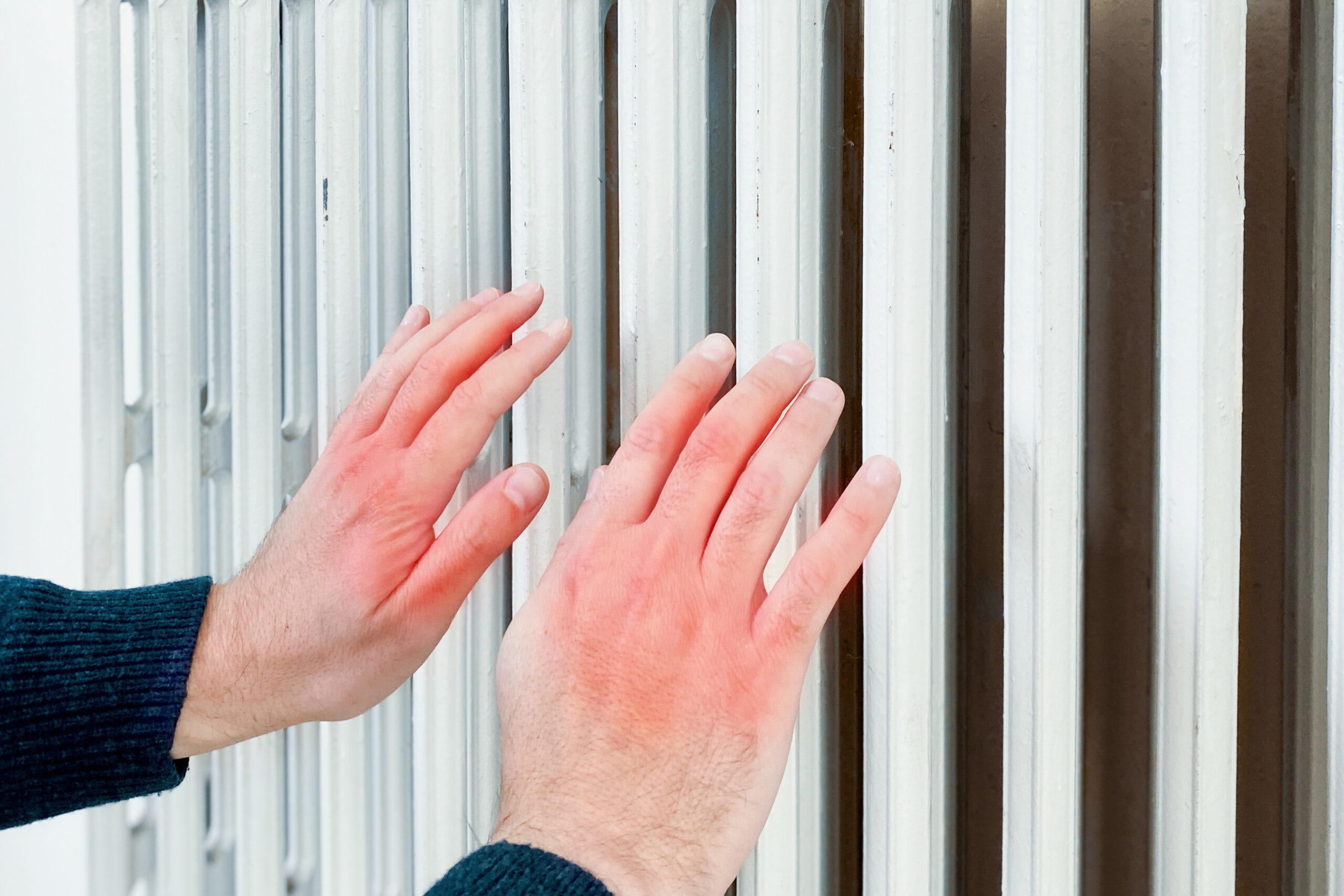
Do you remember as a child being told not to put your hands on the radiators (or your bottom) when you came in from playtime? And you were probably told that you’d get chilblains if you did! Well, that was wise advice.
Most of us have heard of chilblains, but few know what to look out for or what to do if you get them. Our Podiatrist, Paul, has shared his helpful guide and tips.
Symptoms and Causes
Chilblains are small, itchy patches that can appear on your skin after you’ve been in the cold. They are caused by an abnormal response to heat and cold. They usually clear up on their own, but you may need to see a Podiatrist or GP if they do not go away.
- Chilblains usually appear a few hours after you’ve been in the cold.
- You mostly get them on your fingers and toes. But you can also get them on your face and legs.
- Your skin can feel itchy or like it’s burning.
Prevention and Treatment
Here are some things you can try yourself to help get rid of chilblains and stop them from coming back.
- Do try to avoid being outside when it’s cold or damp – if you do go out, wear warm, waterproof clothing, gloves, thick socks and thermal insoles.
- You can take paracetamol or ibuprofen for the pain.
- Do not put your feet or hands on a radiator or under hot water to warm them up.
- Avoid smoking or having drinks that have caffeine in them – this can affect the flow of blood in your fingers and toes.
- Do not scratch or pick at your skin.
Seek medical help if:
- You have chilblains, and your skin has not got any better after 2 to 3 weeks.
- There is pus coming out of your skin.
- Your temperature is very high, or you feel hot or shivery.
- You keep getting chilblains.
- You have diabetes and have chilblains – foot problems can be more serious if you have diabetes; see our blog post – GOOD FOOT CARE IS IMPORTANT FOR PEOPLE WHO HAVE DIABETES.
If you find yourself suffering from the effects of winter, book online from our website or call 01590 679560 for appointments with chiropractors Colin, Charlotte or Fiona, or massage therapist Hannah. For acupuncture appointments, call Amanda directly on 07876 343 821. And for podiatry appointments call Paul directly on 07857 137732.